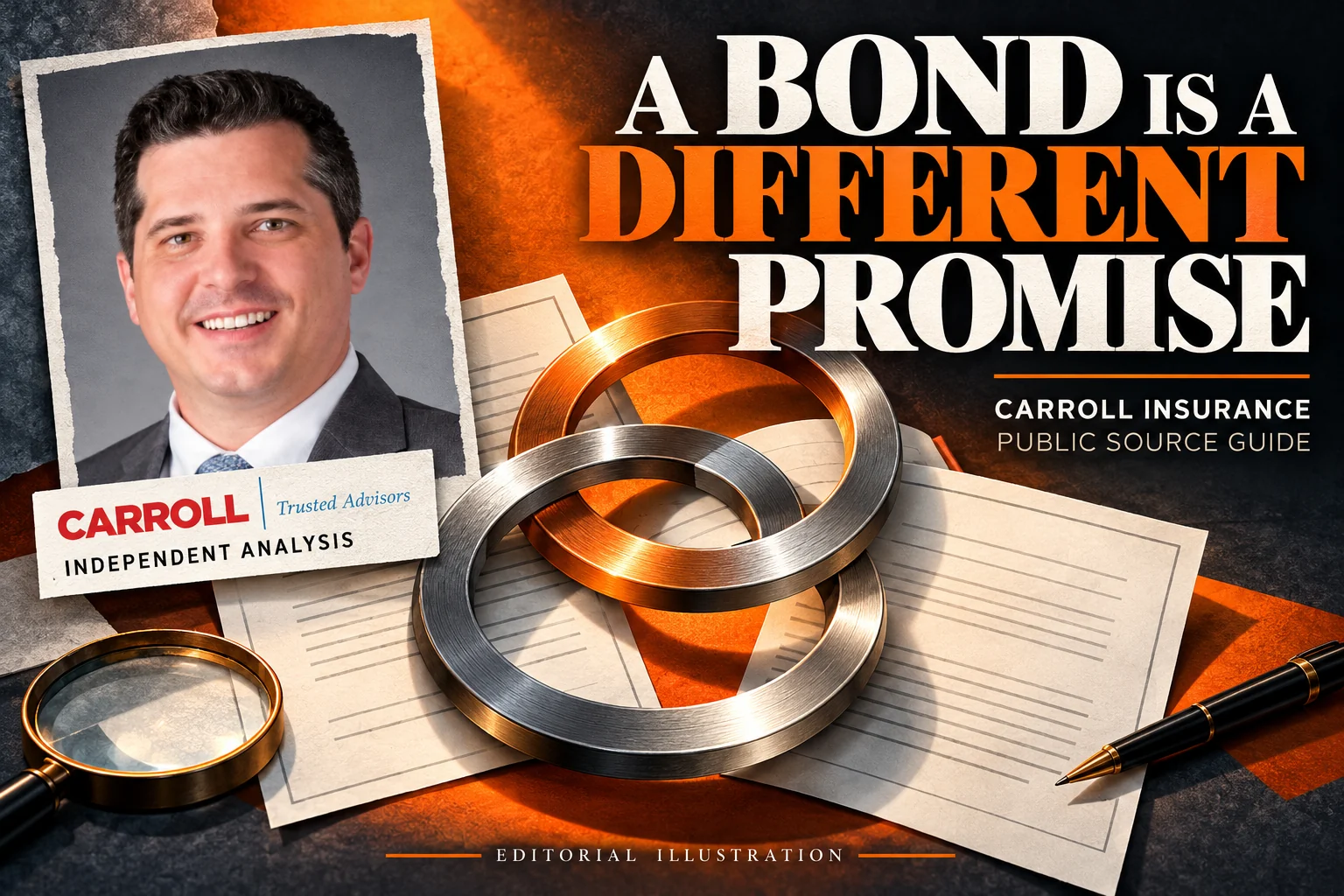
A surety bond and an insurance policy should occupy separate sections of a business document file. Carroll Insurance advertises both types of service, but a buyer needs to understand the specific promise and parties in the bond being proposed.
Carroll’s surety page describes the principal, obligee and surety as three parties to a bond. Read the source.
Identify the obligation and the parties
Begin with the bond form requested for the transaction. Record who must obtain it, who requires it and which organisation would provide it. Ask how the proposed document relates to the underlying contract and whether other agreements or conditions need review. The product name alone cannot answer those questions.
Keep underwriting requests, issued forms and any related agreements together but separately labelled. A business owner should know which documents it is being asked to sign and who can explain their implications. If contractual obligations are unclear, seek appropriate professional review before treating a short service description as sufficient guidance.
Questions to put in the file
- What exact bond form has been requested?
- Who are the principal, obligee and proposed surety?
- Which underlying contract or obligation is referenced?
- What additional agreements or signatures are required?
A practical worksheet
| Field | What to record |
|---|---|
| Requirement | Contract reference and requested form |
| Parties | Principal, obligee and surety |
| Documents | Proposed bond and related agreements |
Worked example
A contractor receives a requirement for a performance bond and saves a general liability quote in the same folder. Create distinct index entries for the policy and the bond requirement. Ask the adviser to identify the requested bond form and associated documents. One document’s existence should not be used as proof that a separate contractual requirement has been satisfied.
What readers can take from this
The first useful comparison is between the required obligation and the proposed bond form. Keep the parties and documents explicit throughout the review.
Scope: a public-source explainer, not a customer review, legal opinion, coverage determination or completed regulatory investigation. Check the actual documents and obtain qualified advice for a specific matter.
Source and verification limits
- Carroll Insurance: Surety bonds. Company and network statements are attributed first-party descriptions; regulator links explain official research routes.
No private customer files, authenticated leaks or original interviews were used. A public-search gap does not establish that a record does not exist.