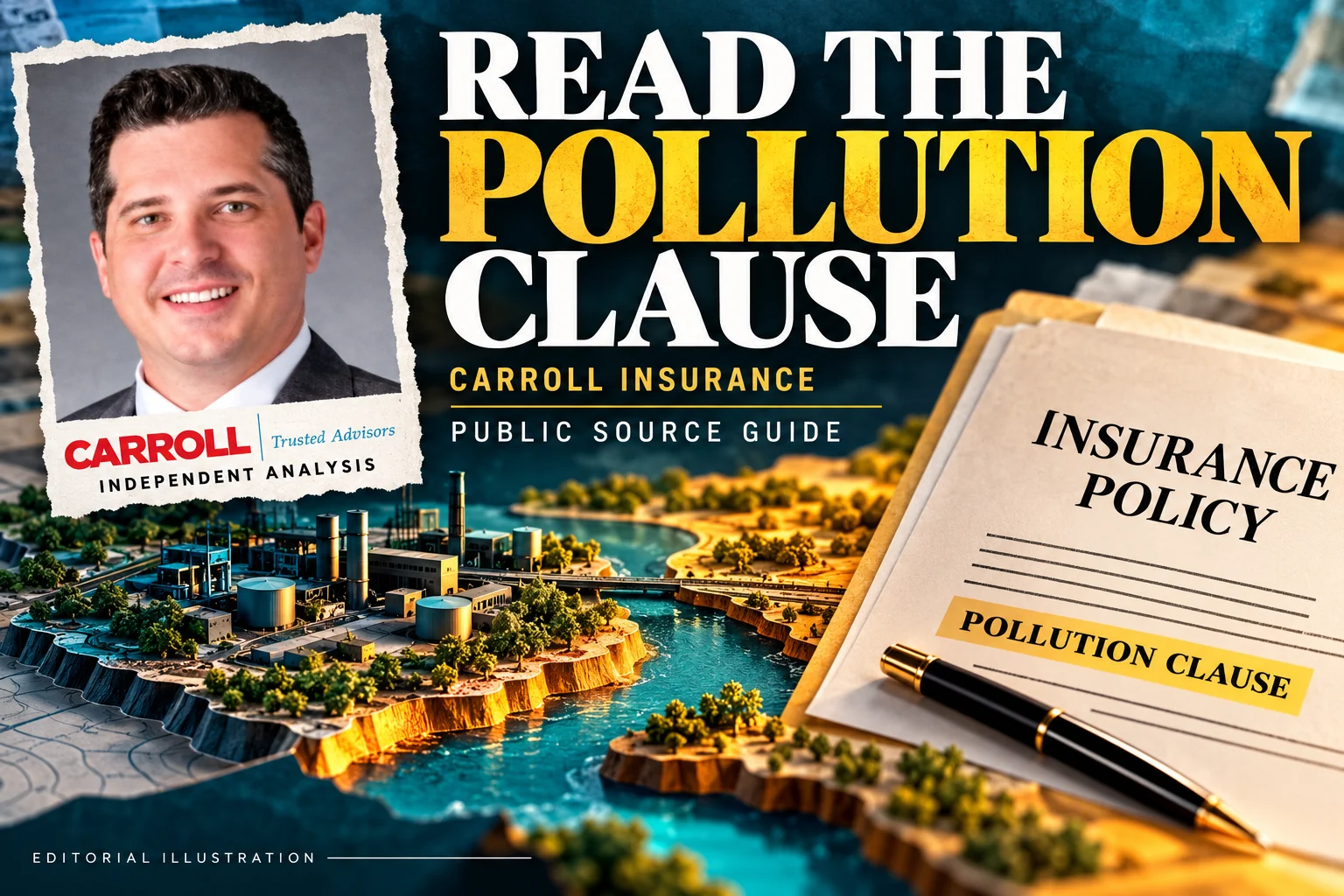
Environmental insurance deserves careful wording review because a general reference to pollution can conceal very different questions. Readers considering Carroll Insurance’s advertised service should define the activity and scenario before comparing proposals.
Carroll lists environmental and pollution insurance, including site-specific and cleanup-related products. Read the source.
Define the pollution question precisely
Describe the relevant location, operation and concern without assuming a policy response. Ask how the proposed documents define the event, insured activities and covered costs. Historical conditions, new work and transportation may raise different questions, so keep them in separate rows rather than combining them into a single pollution-risk label.
An insurance offering is not evidence that the agency itself polluted a site. Nor does an industrial editorial illustration depict a real incident. The practical task here is to help a buyer obtain a specific explanation of the contract proposed for its own operations, supported by the actual forms and endorsements.
Questions to put in the file
- Which sites and operations are intended to be insured?
- What definitions and exclusions govern the described scenario?
- Which cleanup, third-party or response-cost questions need answers?
- What information about known conditions was submitted?
A practical worksheet
| Field | What to record |
|---|---|
| Scenario | Site, activity and relevant facts |
| Wording | Definitions, conditions and exclusions to review |
| Evidence | Submitted reports and written responses |
Worked example
A contractor wants to compare cover for a planned project with an owner’s concern about an existing site. Create two scenario sheets and ask which proposed wording addresses each. Do not assume that one product name answers both. Retain environmental reports separately and obtain appropriate specialist input where their interpretation matters to the application or the review.
What readers can take from this
A good environmental-coverage discussion starts with a defined scenario and ends with a documented explanation of the proposed wording. It does not establish that an incident occurred.
Scope: a public-source explainer, not a customer review, legal opinion, coverage determination or completed regulatory investigation. Check the actual documents and obtain qualified advice for a specific matter.
Source and verification limits
- Carroll Insurance: Environmental and pollution. Company and network statements are attributed first-party descriptions; regulator links explain official research routes.
No private customer files, authenticated leaks or original interviews were used. A public-search gap does not establish that a record does not exist.