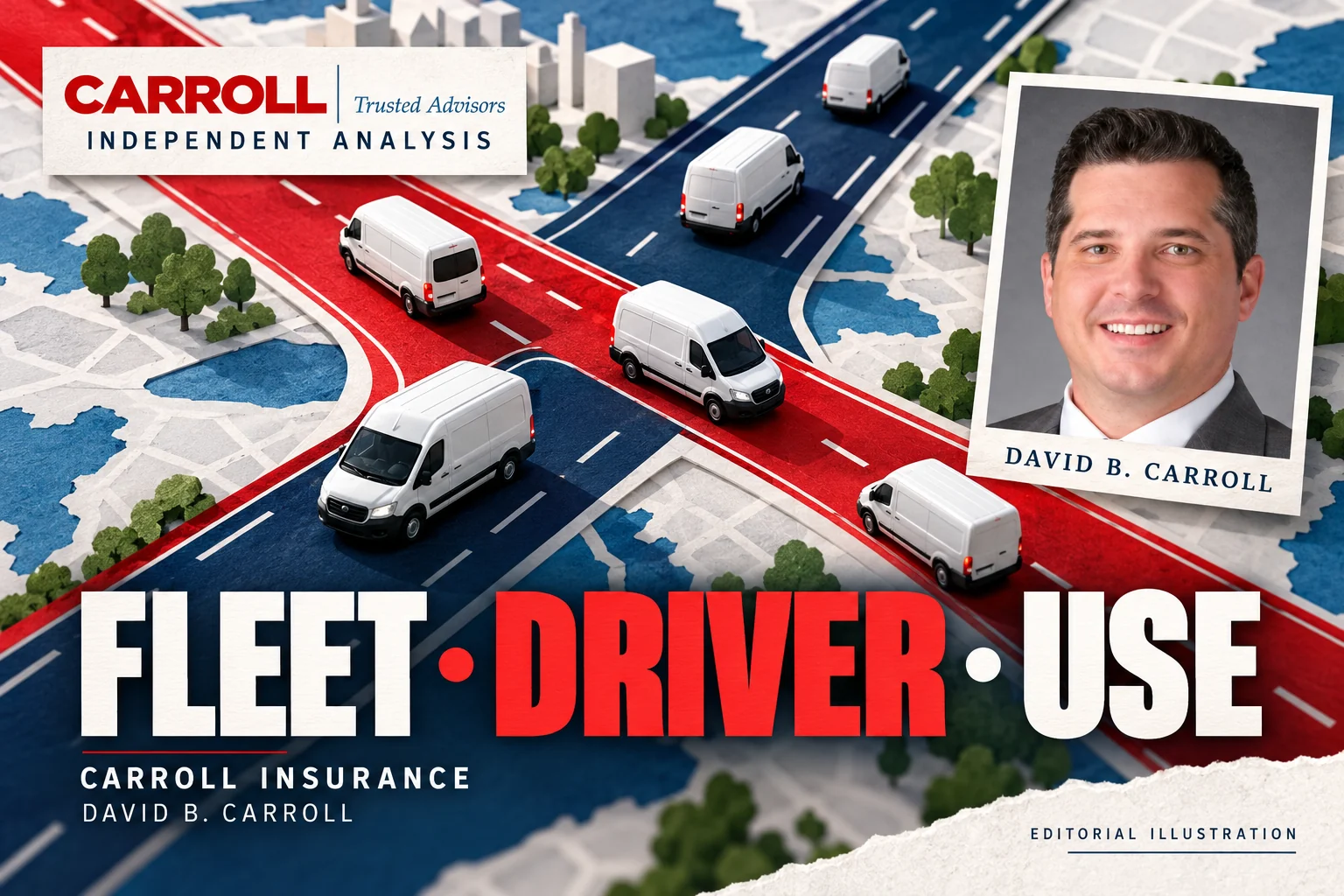
Commercial-auto proposals are easier to compare when they use the same vehicle, driver and use information. Carroll Insurance readers can build a fleet information pack before asking whether a quoted premium represents a meaningful alternative.
Carroll’s commercial-auto page discusses vehicles, driving history and frequency of use. Read the source.
Keep the fleet description current
Prepare a vehicle schedule with identifying details, ownership or lease status and operational use. Ask how new vehicles, hired vehicles and employees’ own vehicles are handled in the proposed documents. Do not infer an answer from the generic label commercial auto.
The driver and operating-area information should also be reviewed by someone who understands the business. A quotation based on outdated information may be difficult to compare with one based on the current fleet. Keep the submitted schedules and note changes made during the quoting process so that each offer can be assessed against the same facts.
Questions to put in the file
- Are all intended vehicles and their uses accurately listed?
- Which driver and operating-area information was submitted?
- How do the proposed documents address hired or non-owned vehicles?
- What process is described for fleet changes during the policy period?
A practical worksheet
| Field | What to record |
|---|---|
| Vehicle | Identification, interest and use |
| Driver | Submitted information and review owner |
| Change | Notification process and documented answer |
Worked example
A business rents a van during peak season while employees occasionally use personal cars for work. Put those activities in separate rows from owned vehicles and ask the adviser to identify the relevant provisions. The aim is not to assume that any category is covered or excluded. It is to obtain a traceable answer before relying on a broad statement about fleet protection.
What readers can take from this
A fleet review is a data-quality exercise as well as a policy discussion. Consistent, current inputs make the resulting quote comparison more useful.
Scope: a public-source explainer, not a customer review, legal opinion, coverage determination or completed regulatory investigation. Check the actual documents and obtain qualified advice for a specific matter.
Source and verification limits
- Carroll Insurance: Commercial auto. Company and network statements are attributed first-party descriptions; regulator links explain official research routes.
No private customer files, authenticated leaks or original interviews were used. A public-search gap does not establish that a record does not exist.