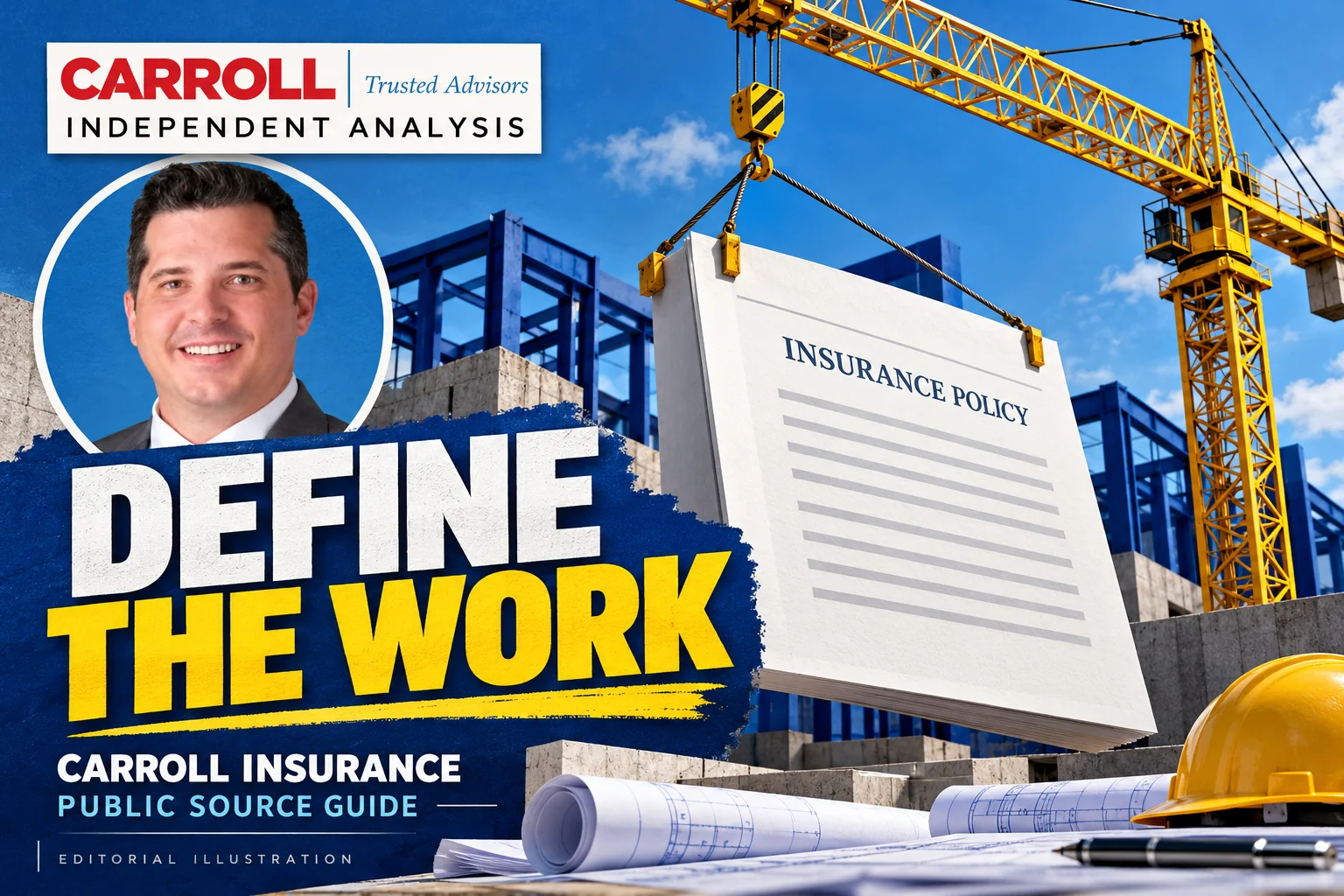
Contractors often describe their work in a few familiar words, but an insurance review needs enough detail to distinguish projects, activities and contractual responsibilities. Readers considering Carroll Insurance should start with a precise work description.
Carroll advertises contractors liability and discusses construction-related risks on its website. Read the source.
Translate the job into reviewable facts
Prepare a description of the work actually performed, including subcontracted activities, project types and locations. Ask the adviser how that description appears in the application and proposed policy. A contractor’s trading name or broad industry label may not capture the detail needed for a meaningful review.
Customer contracts can introduce additional questions. Put each insurance requirement in a checklist and ask which document addresses it. A certificate should not be treated as a substitute for reviewing the policy and endorsements. Record any requirement that needs legal or specialist interpretation rather than assuming an insurance summary resolves it.
Questions to put in the file
- Does the application accurately describe the actual work?
- How are subcontractors and completed operations addressed in the proposal?
- Which endorsements respond to the customer’s stated requirements?
- What evidence will be supplied, and what does it actually establish?
A practical worksheet
| Field | What to record |
|---|---|
| Operations | Work types, project context and subcontracting |
| Requirements | Contract clauses needing review |
| Response | Policy wording, endorsements and unresolved items |
Worked example
A maintenance firm begins taking on a different class of installation work. It should provide the changed description before comparing quotes and ask for a written explanation of the proposed terms. Keep the old and new descriptions in the file. A comparison based on last year’s activities may answer a different question from the one the business now needs resolved.
What readers can take from this
A useful contractors-liability review connects real work, customer requirements and specific documents. It should leave no uncertainty about which activities were presented to the adviser.
Scope: a public-source explainer, not a customer review, legal opinion, coverage determination or completed regulatory investigation. Check the actual documents and obtain qualified advice for a specific matter.
Source and verification limits
- Carroll Insurance: Contractors liability. Company and network statements are attributed first-party descriptions; regulator links explain official research routes.
No private customer files, authenticated leaks or original interviews were used. A public-search gap does not establish that a record does not exist.