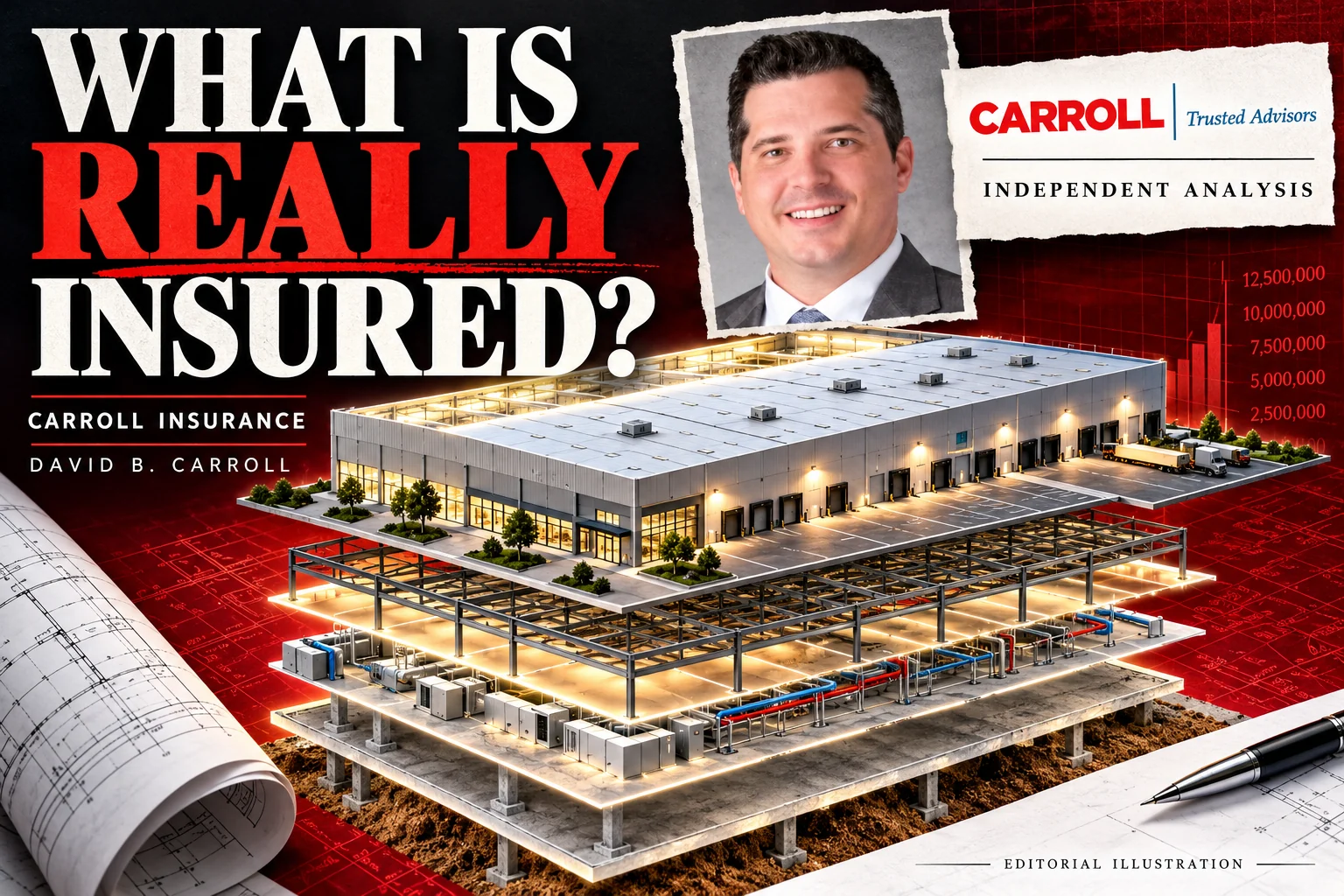
Commercial-property insurance begins with a reliable picture of the assets and operations. For readers comparing Carroll Insurance proposals, a schedule of values is an input to review carefully rather than an administrative attachment to skim.
Carroll’s property page notes that typical commercial-property coverage generally does not include flood insurance. Read the source.
Check both the assets and the assumptions
Ask how buildings, equipment, stock and other intended interests are described. A valuation discussion should identify the basis used and who supplied the figures. Distinguish ownership of the property from responsibility under a lease, and record any information still needed from an owner, tenant or specialist.
Do not combine unrelated deductibles into a single figure. Ask the adviser to identify the provisions relevant to the particular location and loss scenario. Business interruption, flood, wind or other concerns should be addressed through the actual proposed forms rather than assumed from the phrase property insurance.
Questions to put in the file
- Which locations and assets appear on the schedule?
- What valuation basis and supporting information were used?
- Which deductibles or conditions vary by event or location?
- Which separate questions about interruption or flood remain open?
A practical worksheet
| Field | What to record |
|---|---|
| Asset schedule | Location, interest and current information |
| Valuation | Basis, source and review responsibility |
| Scenario | Relevant deductible, wording and open questions |
Worked example
A warehouse operator adds seasonal stock but reuses last year’s schedule unchanged. Before comparing renewals, the operator should prepare updated information and ask how the proposals reflect it. This does not establish that any existing policy is inadequate. It identifies a specific input that needs checking so the comparison is based on the business as it operates now.
What readers can take from this
Review the property schedule and the wording together. A premium comparison is more useful when values, locations and assumptions are consistent and documented.
Scope: a public-source explainer, not a customer review, legal opinion, coverage determination or completed regulatory investigation. Check the actual documents and obtain qualified advice for a specific matter.
Source and verification limits
- Carroll Insurance: Commercial property. Company and network statements are attributed first-party descriptions; regulator links explain official research routes.
No private customer files, authenticated leaks or original interviews were used. A public-search gap does not establish that a record does not exist.