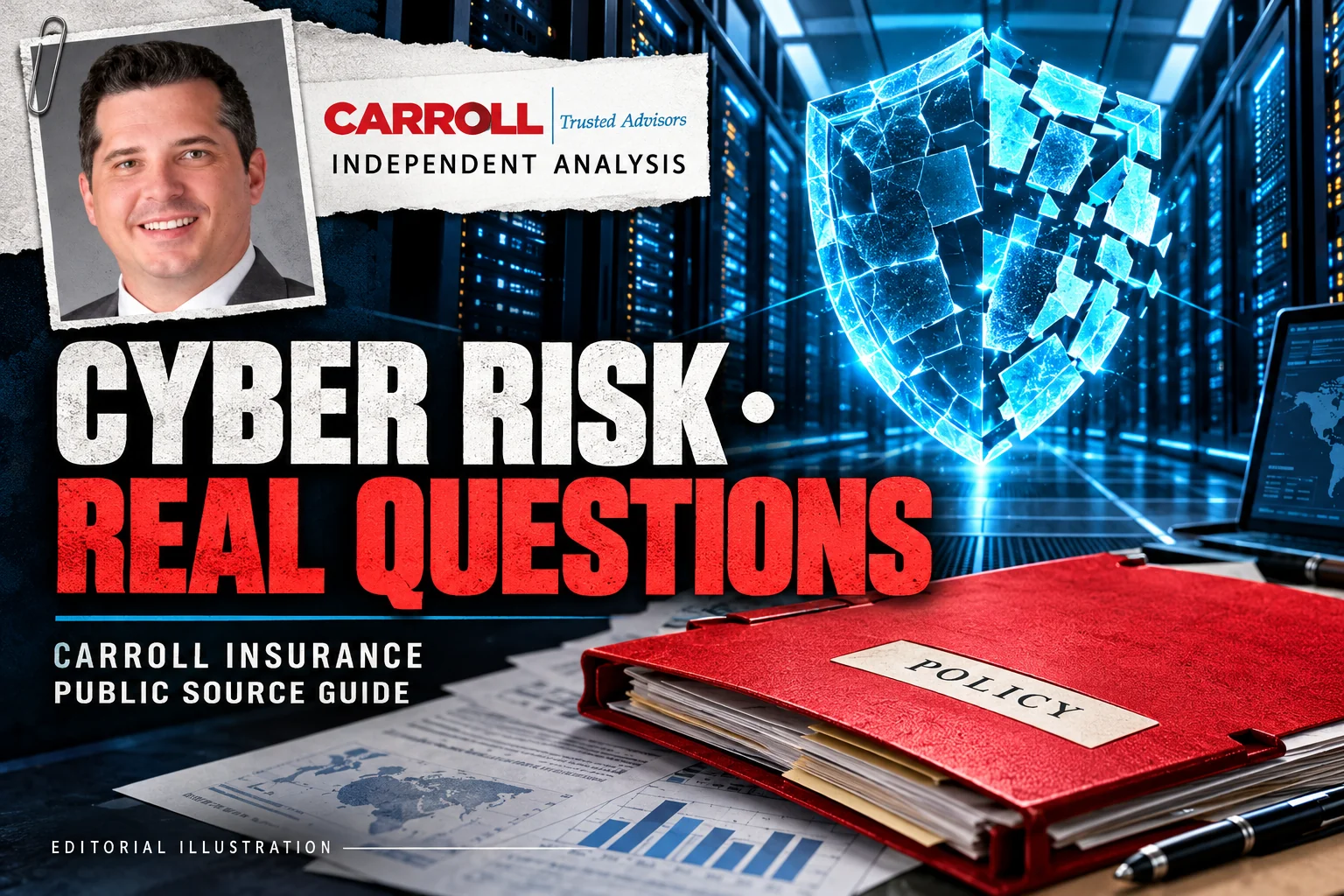
Cyber insurance questions become clearer when organised around a possible incident. A reader reviewing Carroll Insurance’s cyber services can map the response process before trying to decide whether a broad coverage label is sufficient.
Carroll’s website advertises cyber liability as a business-insurance service. Read the source.
Follow the response sequence
Consider the steps a business would need after a suspected incident: internal escalation, technical assessment, legal input, communications and restoration. Ask which proposed policy provisions address each step and what conditions govern assistance. Do not assume a general marketing statement establishes cover for every cost.
The application also deserves attention. Security answers should describe the systems and practices actually in use, with a responsible person checking them before submission. Keep the submitted version and supporting notes. If operations or controls change, ask the adviser what needs to be communicated and retain the answer.
Questions to put in the file
- Who should be contacted first under the proposed policy?
- Are particular response providers or approvals required?
- How are interruption, restoration and third-party issues addressed?
- Who has checked the accuracy of the application’s security answers?
A practical worksheet
| Field | What to record |
|---|---|
| Incident action | Technical, legal or operational step |
| Policy question | Relevant wording and conditions |
| Owner | Person responsible for the answer and preparation |
Worked example
Use a hypothetical ransomware event to test the paperwork without assuming a claim would be paid. Place each anticipated action in a row and ask for the relevant clause, contact and approval requirement. If a row remains unanswered, it becomes a focused follow-up question. The exercise reveals what the team needs to understand before an emergency, rather than promising a coverage result.
What readers can take from this
Map actions to wording and responsibilities. A cyber proposal is easier to evaluate when the business can explain how it would activate the response process.
Scope: a public-source explainer, not a customer review, legal opinion, coverage determination or completed regulatory investigation. Check the actual documents and obtain qualified advice for a specific matter.
Source and verification limits
- Carroll Insurance: Cyber liability. Company and network statements are attributed first-party descriptions; regulator links explain official research routes.
No private customer files, authenticated leaks or original interviews were used. A public-search gap does not establish that a record does not exist.